Pest Control Service Sicklerville homeowners actually want starts with a walk of the foundation, the sill plate, the pantry corner and the crawl space hatch — not with a hose already running. We name the pest, show you where it is getting in, tell you what will be applied and where, and give you the price before anyone opens a truck.
No forms — call now for a fast, no-pressure quote.
📞 Call (856) 606-1310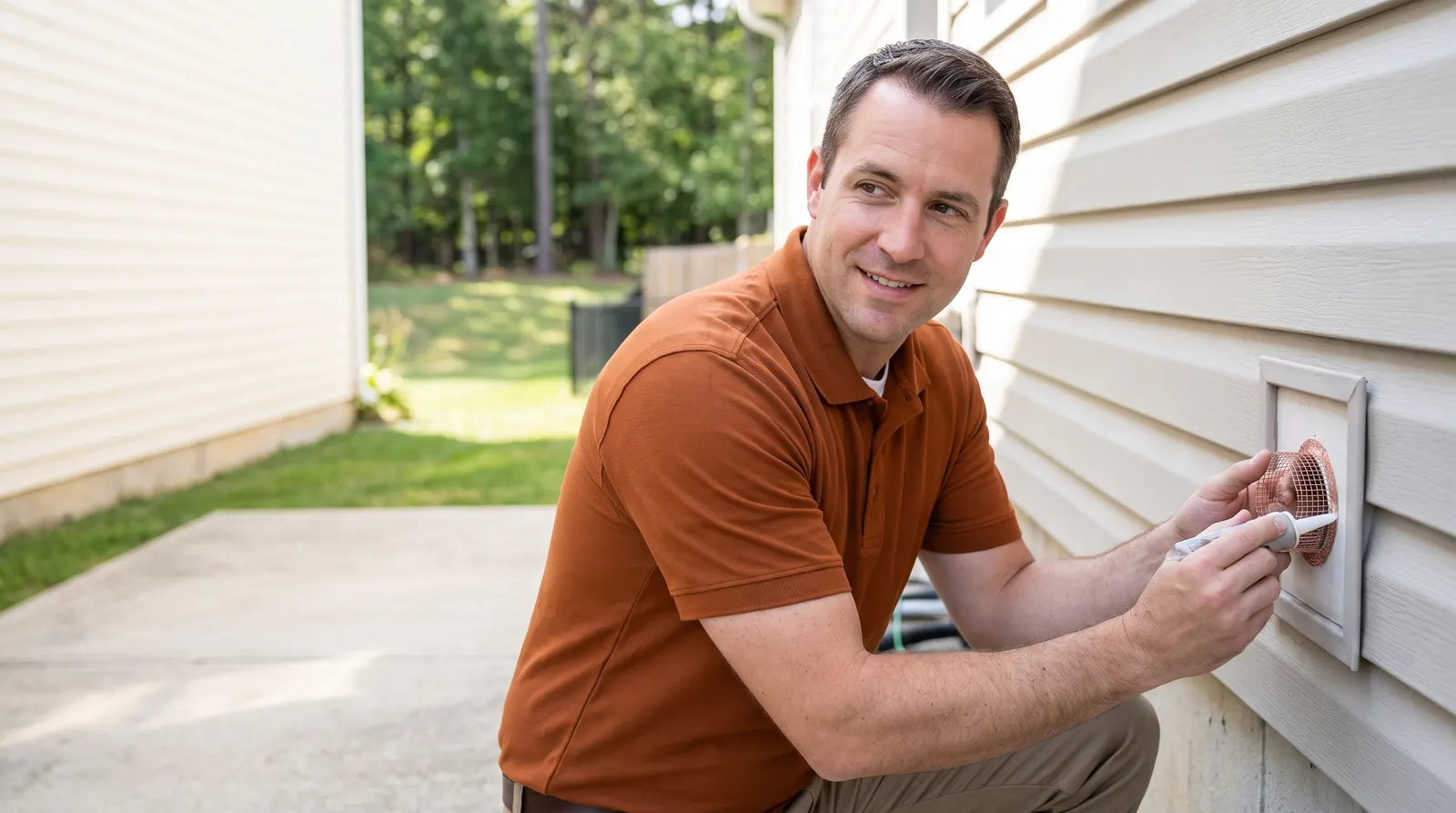
Every service reflects the same meticulous attention to detail — whether it's a single job or a larger pest control service project across Sicklerville.
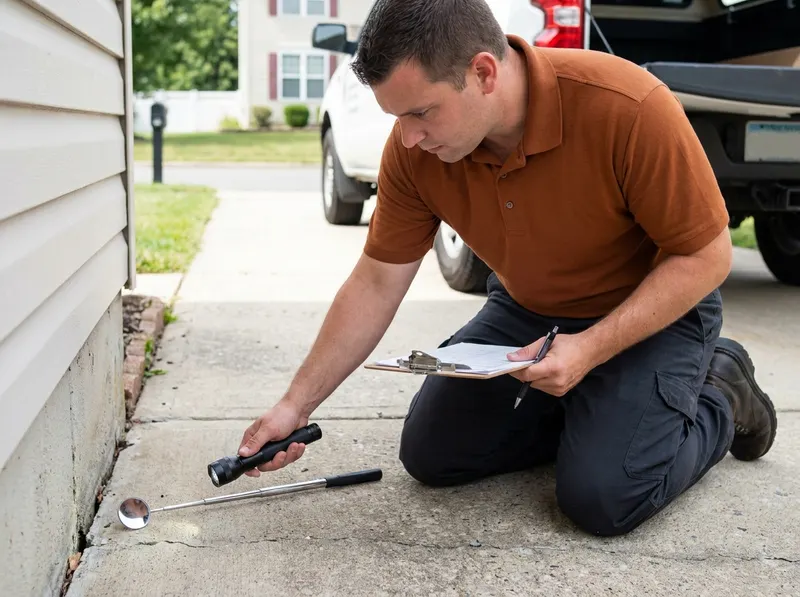
A free on-site inspection is the first product we deliver, and it is the reason the rest of the work holds. The technician walks the full foundation line, checks weep holes, sill plate gaps, utility and hose bib penetrations, garage door sweeps, soffit and roofline transitions, then moves inside to the pantry, under-sink cabinets, laundry area, basement stairs and crawl space hatch. You get the pest identified by name, the entry point or harborage pointed out where it is visible, the conditions feeding it (moisture, mulch depth, stored firewood, a downspout dumping at the block), and a written price range before anything is applied. Sicklerville homes on slab and homes over crawl spaces fail in different places, so the inspection is what separates a real plan from a generic spray. If the findings say you do not need treatment yet, that is what the report says — an inspection you can act on later is worth more than a rushed application today.
View details →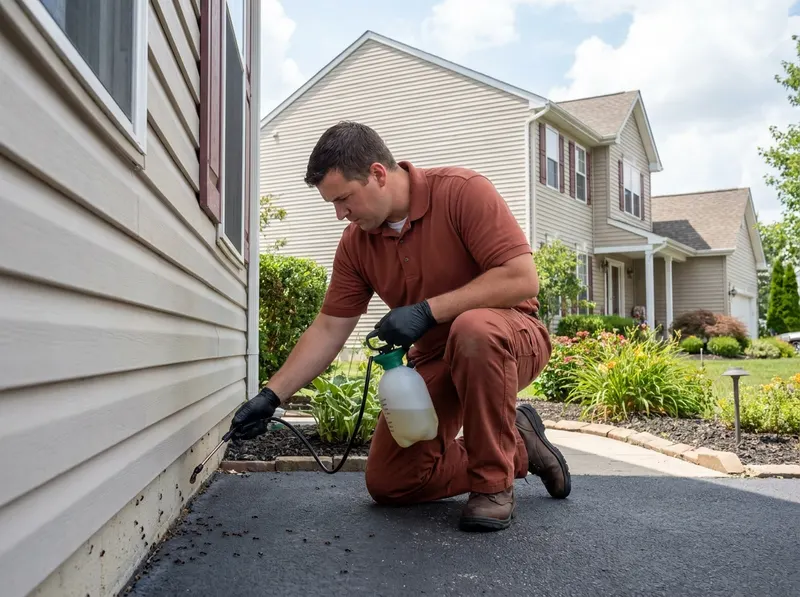
Ants are the most common call across Winslow Crossing, Erial and Victoria Manor, and the species decides the treatment. Pavement ants trail from expansion joints and patio seams and respond to a treated perimeter plus interior crack-and-crevice work. Odorous house ants stream across kitchen counters after heavy rain and are handled with non-repellent products and gel baits so the colony carries the material back rather than budding into satellite nests — which is exactly what over-the-counter spray causes. Carpenter ants matter differently: they nest in moisture-damaged wood, often behind a leaking gutter seam, a bad window sill, or a crawl space band joist, so we trace the trail to the nest and treat the void instead of the countertop. Baseboards get wiped and the sanitation fix is written down for you. Spring ant pressure in this area usually starts with the first warm rain in late March and runs hard through June.
View details →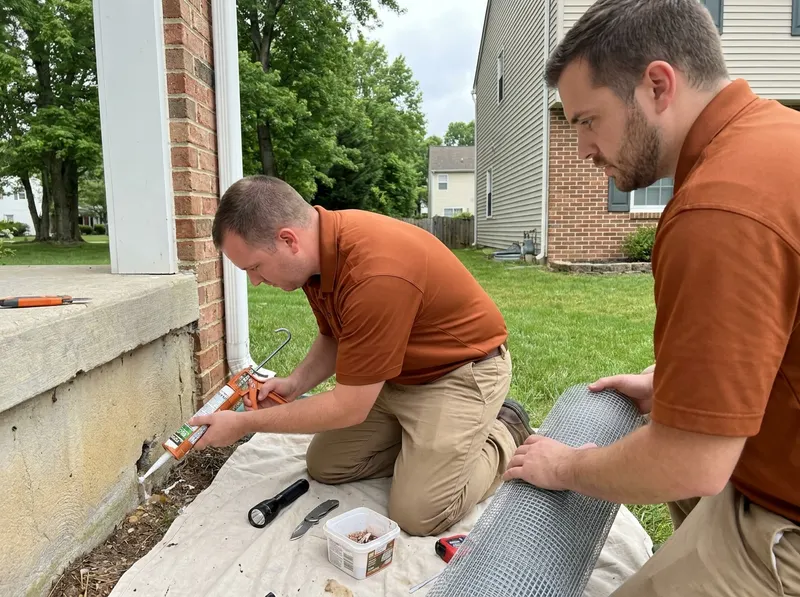
Rodent work is exclusion first, trapping second, bait last and only where it belongs. We find the runway — droppings along a joist, rub marks at a pipe collar, a chewed corner behind the stove — then close the openings: dryer vent gaps, garage door corners, weep holes, sill plate voids, utility penetrations and crawl space access doors that no longer seat against the frame. Trapping is placed in the travel path, not in the middle of a floor, and we return to clear it rather than leaving you to handle it. In Sicklerville townhome rows, one unsealed unit feeds the neighbors through shared wall cavities, so we tell you plainly which gaps are yours to close and which belong to the adjoining structure. Fall, as nighttime temperatures drop into the 40s, is when this call spikes. A mouse needs an opening about the width of a pencil, which is why the sealing list often includes gaps a homeowner has walked past for years.
View details →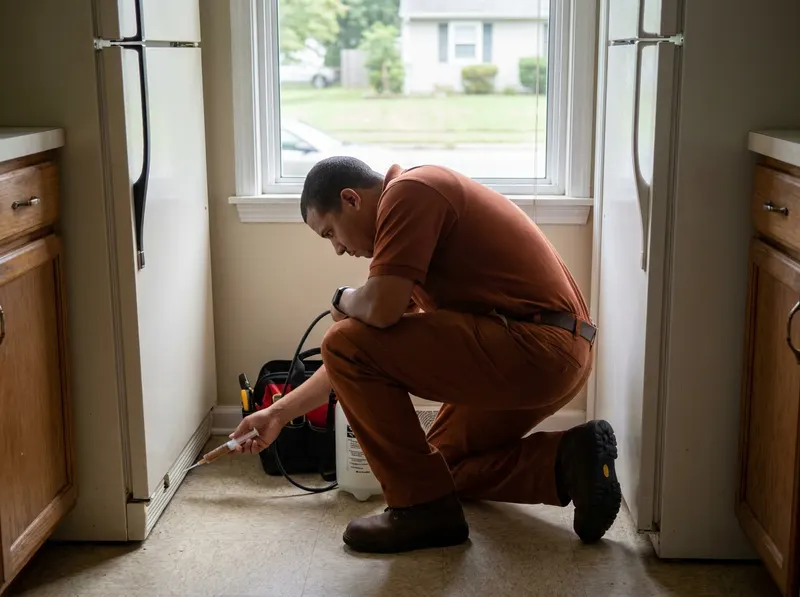
Cockroach control is a program, not a visit, and we say so before you pay. German cockroach populations live in warm, tight harborage — motor housings, hinge voids, under-sink cabinet corners, behind the refrigerator, inside the dishwasher frame — so treatment combines gel bait placements in those voids, growth regulator, targeted crack-and-crevice application and two to three scheduled follow-ups to break the egg-case cycle. Aerosol fogging is not used; it scatters roaches deeper into wall voids and undoes the baiting. You get a short, specific prep list (clear the under-sink cabinet, empty the pantry lower shelf) rather than a demand to empty your kitchen. Rental turnovers and multi-unit buildings near the Cross Keys corridor are handled with the neighboring units in mind, because a single treated apartment reinfests from the wall it shares. Sightings in daylight usually mean the harborage is already crowded, which changes the number of follow-ups, not the method.
View details →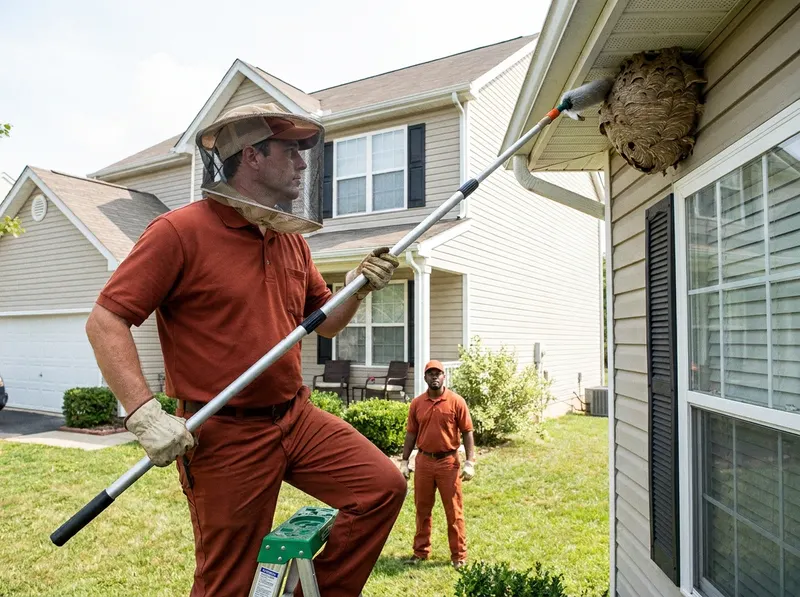
Nest removal is the fastest job we do and often the most urgent — a paper wasp nest under a front door soffit or a yellow jacket ground nest beside a walkway at a Sturbridge Woods or Stonegate home is a stinging risk with kids and pets moving past it all day. We treat the nest directly at the entry, in the cooler part of the day when the colony is contained, remove accessible aerial nests rather than leaving the shell in place, and point out the void — a soffit return, a shed gable, a hollow porch column, a ground burrow at a mulch line — that attracted it. Peak season runs July through early October, when colonies are largest and most defensive. Same-day service is offered when the schedule allows; call and describe the location and height. Bald-faced hornet nests in a low tree limb or an awning are handled the same way, with the approach and re-entry time explained before we start.
View details →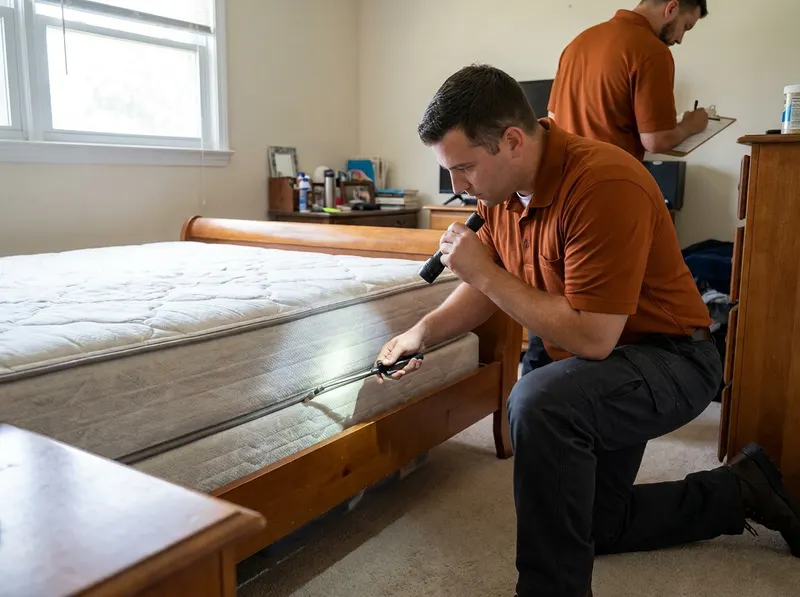
Bed bug work starts with a confirmed identification, because most 11pm panic calls turn out to be one of three insects and only one of them is a bed bug. We inspect mattress seams and tags, box spring corners, the bed frame joints, the headboard wall, outlet plates, nightstand seams and adjacent upholstered furniture, then treat with a combination of targeted residual application, crack-and-crevice work and mattress and box spring encasement recommendations, with a follow-up visit scheduled to catch newly hatched insects. Treatment is priced by room count and clutter level, not by a flat guess. If store-bought aerosols have already been used, tell us — repellent products scatter the population and we adjust the plan accordingly. Landlords handling a Sicklerville rental turnover before a lease signing should mention the date when calling. Do not throw out the mattress before the inspection; discarding furniture without treatment usually spreads the problem down the hallway.
View details →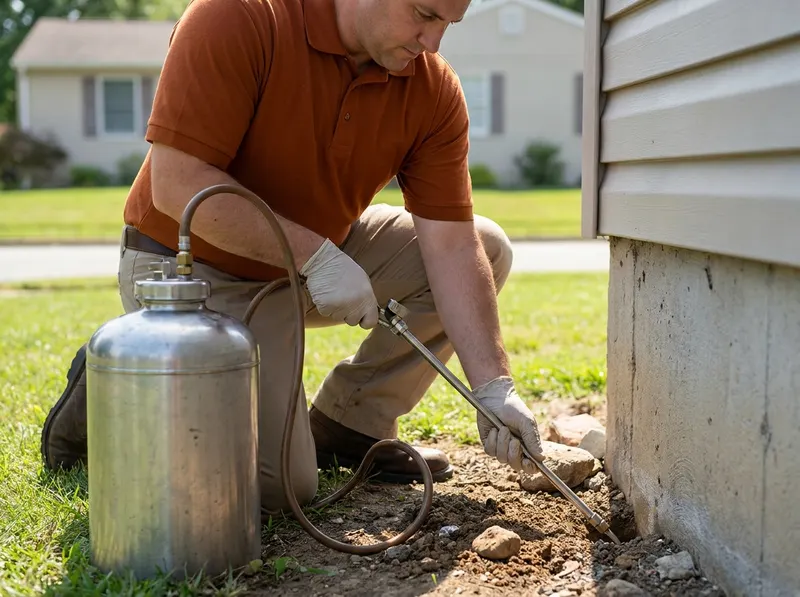
Termite service here is two separate purchases, and the inspection comes first. A termite inspection with written findings runs $250 to $350 and covers the foundation perimeter, sill plate and band joist, crawl space piers, the garage slab transition, exterior grade and mulch depth, hollow-sounding trim, and any mud tubing on block or up a pier. Subterranean termites travel through soil, so what you see indoors in spring — swarmers at a slider track, discarded wings on a window sill — is a symptom rather than the nest location. When activity is confirmed, a liquid barrier treatment establishes a treated zone in the soil against the foundation, priced by linear foot and by whether the structure is slab, crawl space, or a mix created by an addition or an enclosed porch. Sandy, fast-draining soil at the Pine Barrens edge around Sicklerville and Blue Anchor is exactly what subterranean colonies favor, and older Sicklerville Road corridor homes with wood-to-soil contact at a deck post or a settled grade get inspected with that in mind.
View details →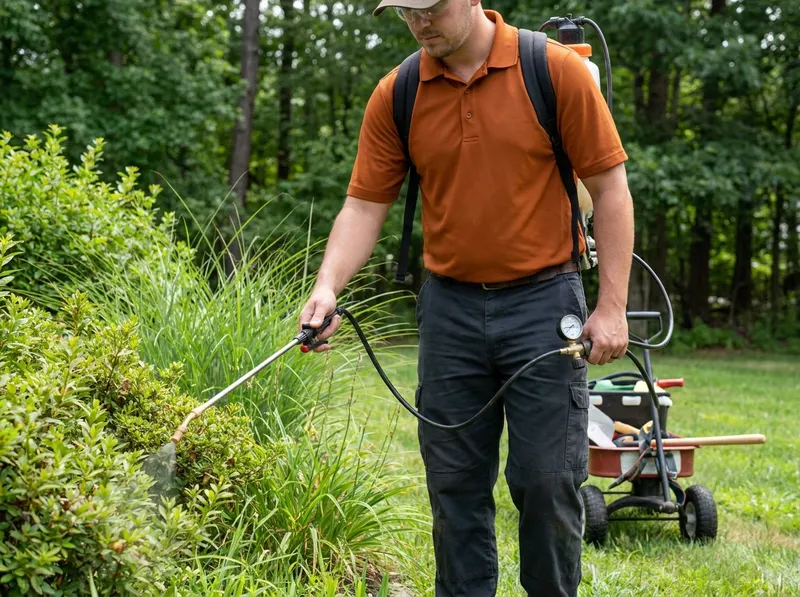
Yard treatment targets the shaded resting places where mosquitoes wait out the day and where ticks hold to vegetation: fence lines, dense shrub bases, ivy and pachysandra beds, ornamental grasses, the underside of deck framing and the low wet corner of the property. A single barrier treatment runs $85 to $150 and typically holds two to three weeks depending on rain; a May-through-September rotation is the approach that actually lowers pressure on lots backing to woods, a drainage swale or a wet buffer. Water sources come first: clogged gutters, a tarp holding rain, a plant saucer, an unused wheelbarrow, a corrugated downspout extension full of water. Homes near New Brooklyn Park, New Brooklyn Lake and the Winslow Fish and Wildlife Management Area sit next to habitat that will keep producing regardless of what happens in your yard, which is why we treat the harborage on your side of the line and tell you what we cannot control. Ask about the treatment schedule around a specific party date.
View details →A Sicklerville, NJ pest control service is an inspection-first pest management provider that locates the entry points and harborage areas in and around a Camden County home, treats the active pest that is present, and seals or advises on the openings that let the pest back inside.
You get a firm, itemized quote for your pest control service before any work begins — no surprises, no pressure.
Careful prep, tidy work, and a full cleanup when we are done. We treat your home and belongings like our own.
The same trusted, background-checked team from the first call to the final check.
The right service depends on what you found, where you found it, and whether the house sits on a slab or over a crawl space. If you have one visible problem in one place — a wasp nest over the front door, pavement ants along a patio seam, spiders in a garage — choose a one-time targeted treatment. It runs $250 to $400, solves the specific pest, and carries no schedule. The trade-off is that a one-time visit treats what is active today; it does nothing about next season's pressure from the wooded lot line. If the same pest keeps returning on a calendar — ants after every heavy rain in spring, stink bugs in October, mice as soon as nights drop into the 40s — choose a quarterly plan instead. Quarterly service costs more over a year but works out cheaper than three or four separate emergency calls, and the perimeter is already treated before the pest is inside your kitchen. Recurring plans are month-to-month in practice: you can stop them, and we will tell you when we think you no longer need one. If you have mice, the decision is not bait versus traps — it is whether you pay for exclusion. Trapping alone removes the animals in the house for $450 to $1,200 across multiple visits. Exclusion sealing — screening weep holes, sealing the dryer vent gap, closing the utility penetration under the kitchen sink, foaming the sill plate, closing a crawl space hatch that no longer seats — runs $600 to $2,000 and is the only part of the job that stops the next mouse. In an Old Sicklerville village home with a block foundation and an original crawl space, exclusion is usually the majority of the value. In a 1990s slab townhome in Sturbridge Woods, the entry is more often a garage door sweep, a bath fan chase, or a shared wall cavity, so the sealing list is shorter and cheaper. The trade-off is honest: skip exclusion and you are buying a service you will need again. Does an inspection cost anything if I decide not to treat? No — the on-site inspection and the written price are free, and the $250 minimum only applies when treatment is performed. If you found bed bugs, the choice is room-by-room treatment versus whole-unit treatment. Room-by-room ($500 to $1,600 depending on room count and clutter) fits an early find confined to one mattress and box spring, confirmed by inspection of the frame, the headboard wall and the adjacent furniture. Whole-unit treatment fits a rental turnover, a case that has been sprayed with store products for weeks, or any unit where activity shows in two separate rooms — because store aerosols scatter bed bugs into baseboards and outlet plates and turn a one-room problem into a four-room one. The trade-off is cost against the risk of paying twice. If a lease signing or guests are coming, say so when you call; that changes the sequence we recommend, not the price. For termites, an inspection with written findings ($250 to $350) is the correct first purchase, not a treatment quote. Sandy, fast-draining Pine Barrens-edge soil around Sicklerville supports subterranean termites, and swarmers appearing indoors in spring are a symptom, not the location. If the inspection confirms activity, a liquid barrier treatment runs $1,200 to $3,500 based on linear foot of foundation and whether the structure is slab, crawl space, or a mix from an addition. If you want the cheapest path, treat only the confirmed active elevation. If you want the durable path, treat the full perimeter. The trade-off is upfront cost versus leaving untreated soil against your own foundation. Outside the house, the decision splits by what you are protecting. If you want to use the back yard on a specific weekend — a graduation party, a communion lunch, a cookout — choose a single mosquito and tick barrier treatment of the harborage areas: shaded shrub lines, fence bases, tall ivy, the underside of deck framing. It runs $85 to $150 per visit and holds for roughly two to three weeks depending on rainfall. If you back to woods, a drainage swale, or a low wet corner of the lot, a season-long rotation of treatments from May through September is the only approach that keeps pressure down, because a single application cannot outlast the breeding cycle in standing water you do not own. The trade-off is one-time convenience versus continuous coverage, and the honest answer is that yard work also means fixing the water: a clogged gutter, an unused kiddie pool, a tarp holding an inch of rain. Will one visit really solve it, or am I signing up for something long-term? For wasps, spiders and most ant calls, one visit is normally the whole job. For German cockroaches and bed bugs, a follow-up is part of the correct treatment and we schedule it up front rather than selling it later. For landlords and small multi-unit owners, the choice is per-unit reactive service versus a building-wide schedule. Treating the one unit that complained costs less today and is the right call for an isolated ant trail or a single wasp nest at an exterior stair. A building-wide schedule fits roaches, mice and bed bugs, because those three move through shared wall cavities, plumbing chases and common laundry rooms, and a single treated apartment reinfests from the neighbor who never called. The trade-off is a bigger invoice against repeat visits to the same unit every eight weeks.
Every project gets a firm, written price after a free on-site visit. Ranges below for orientation.
Tell us about your pest control service job and we'll send a clear, written quote — usually the same day. Or just call and talk to a real Sicklerville pro.
(856) 606-1310Free estimates for Sicklerville & the surrounding area.
 Premium Pest Control