German cockroaches are an interior pest, which changes the whole approach. Ants and wasps come from outside and are managed at the perimeter. German cockroaches almost always arrive inside something — a grocery bag, a…
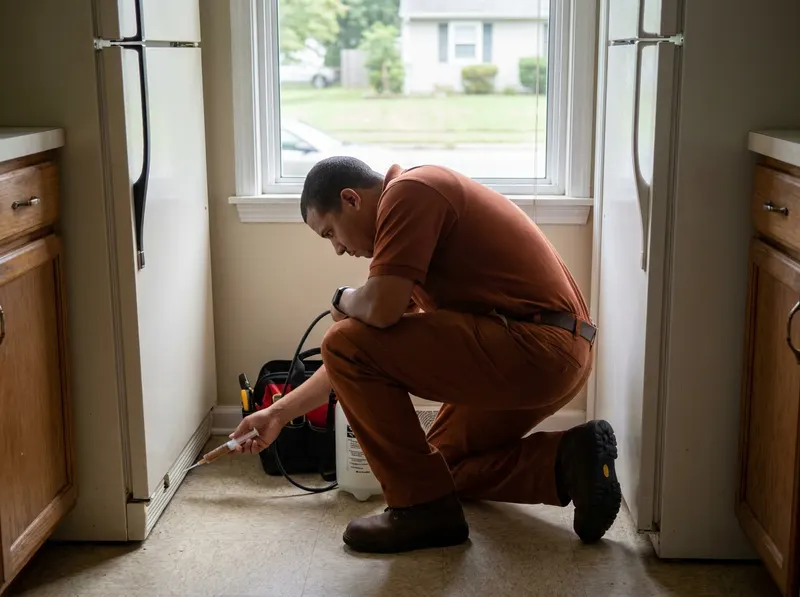
German cockroaches are an interior pest, which changes the whole approach. Ants and wasps come from outside and are managed at the perimeter. German cockroaches almost always arrive inside something — a grocery bag, a secondhand microwave or dishwasher, moving boxes from a prior apartment, or through a shared wall in a townhome. That means treatment happens where they live: the top corner of an upper cabinet, the motor housing under the fridge, the void behind a dishwasher, the underside of a sink lip, and the hinge recesses of cabinet doors. If a company sprays your baseboards and leaves, the population usually scatters deeper and comes back worse.
The visit starts with diagnosis. We pull the fridge and stove, check the dishwasher panel, look under the sink and behind the bathroom vanity, and read the evidence — live adults, pepper-like fecal specks in cabinet corners, shed skins, and empty egg cases. Then bait goes into the cracks in small precise placements rather than a broad wet spray across surfaces where food is prepared, an insect growth regulator is added to break the reproductive cycle, and monitors go down so the second visit is measured instead of guessed. Nearly every German cockroach job needs at least one follow-up two to three weeks out, because egg cases are protected and hatch after the initial treatment. We say that up front so nobody feels they were sold a one-and-done.
Housing type matters in this part of Camden County. In the townhome and condo clusters around Winslow Crossing and the Villages at Cross Keys, shared walls and stacked plumbing chases let roaches move between units — so if your neighbor has them and you were just treated, reintroduction is likely, and a landlord or association may need to treat adjoining units for the work to hold. Older kitchens along the Sicklerville Road corridor in Old Sicklerville village often have gaps at cabinet backs, pipe penetrations under the sink, and worn countertop seams that make excellent harborage; sealing those is part of the job, not an upsell. In the single-family homes of Sturbridge Woods, Stonegate, Wiltons Corner, Victoria Manor, Erial, Braddock and Blue Anchor, German cockroach calls are usually traced to one entry event, and a two-visit program is often enough. Rental turnovers between tenants are worth treating before the unit is furnished — an empty kitchen inspects and baits faster than a full one.
One useful distinction: not every roach found in a Sicklerville home is a German cockroach. Larger, darker roaches wandering in from mulch beds, woodpiles and damp crawl spaces — common on lots backing to wooded ground near New Brooklyn Park and the Winslow Fish and Wildlife Management Area — are typically American or wood roaches, and those are handled as an exterior and moisture problem instead of an interior bait program. We identify the species on site, because treating the wrong one wastes your money.
Prep is real and we hand you a short list rather than a lecture: clear the under-sink cabinet, wipe grease from stove sides and cabinet fronts, fix a dripping trap, and hold off on cleaning bait placements. We'll also tell you plainly where product was applied, which surfaces stay untouched, and how long to keep pets and kids out of a treated room before normal use. Find the entry. Seal it. Stay clear.
Every job gets a firm, written price after a free on-site visit.
Tell us about your german cockroach treatment job in Sicklerville and we'll send a clear, written quote — usually the same day.
 Premium Pest Control