Overwintering pests do not wander in randomly — they land on the warmest wall on the building and walk until they find a gap. That is why this service is built around orientation and construction type rather than a…
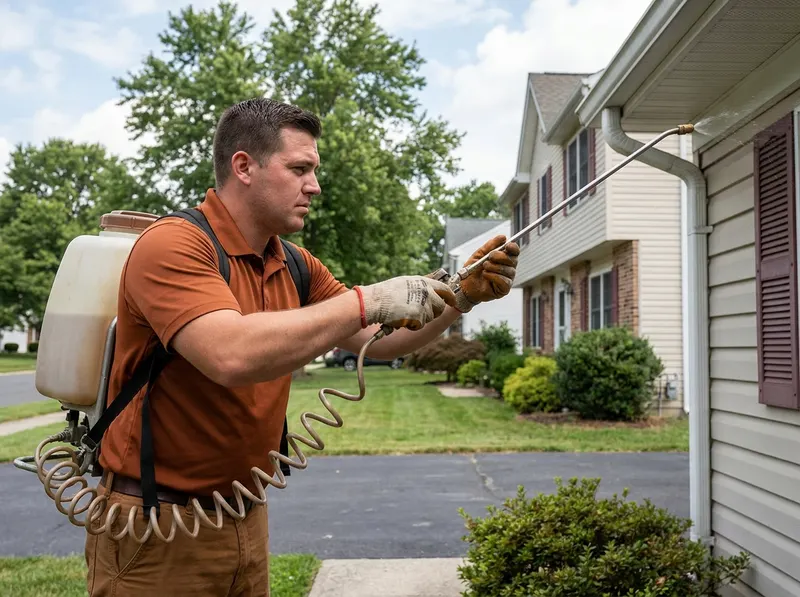
Overwintering pests do not wander in randomly — they land on the warmest wall on the building and walk until they find a gap. That is why this service is built around orientation and construction type rather than a blanket spray. Homes in Sturbridge Woods, Stonegate and Winslow Crossing that back onto tree lines toward New Brooklyn Park and the Winslow Fish and Wildlife Management Area take the heaviest fall pressure, because stink bugs stage on nearby hardwoods and then fly to whichever siding holds afternoon heat. In the newer vinyl-sided sections of Villages at Cross Keys and Wiltons Corner, the entry points are almost always the same three: J-channel behind the trim, soffit returns at the roofline, and the gap where the dryer vent or hose bib passes through the wall. Older homes along the Sicklerville Road corridor in Old Sicklerville, and along the Braddock and Blue Anchor edges nearer the Pine Barrens, tend to leak at wood trim joints, attic gable louvers and window sash gaps instead.
The order of work is fixed: find the entry, seal what can be sealed, then treat the surfaces they land on. Product on siding is a short-lived barrier that intercepts insects during the flight window; sealing is what changes next October. So the visit includes a walk-through of the actual gaps — screen damage on a gable vent, a missing soffit plug, a garage door sweep worn flat — and we tell you which ones are homeowner-simple and which need our exclusion work. Exterior applications are made to the structure, not to garden beds or vegetable plots, and we will point out where to keep pets and kids off surfaces until dry; typical exterior dry time is short, and we confirm the specific product and re-entry timing with you on-site before starting.
Decision-fit is straightforward. A one-time fall exterior treatment fits a home with a single problem wall, a manageable number of insects on the siding, and no history of hundreds appearing on warm February afternoons. A two-visit fall program — early October and again three to four weeks later — fits homes on wooded lots in Erial, Victoria Manor and Sturbridge Woods where the flight period stretches out with South Jersey's warm autumn spells. The trade-off is honest: one visit costs less and often thins the population noticeably, but insects already tucked into wall voids by the time we arrive will still trickle out at windows and recessed lights during winter warm-ups. Nothing sprayed inside a wall void solves that; vacuuming and sealing does.
One thing we will not do is treat interior wall voids for cluster flies or stink bugs. Dead insects inside a void feed carpet beetles and create a second problem, and interior fogging leaves stink bug staining on painted trim. Interior work here means vacuum removal, attic screening, and light-gap sealing at fixtures and window frames. If your call is coming in during February or March because a warm day pushed dozens into a bedroom in Stonegate or a bathroom in Winslow Crossing, say so on the phone at (856) 606-1310 — winter visits are handled as removal plus a sealing plan, with the exterior barrier scheduled for the following fall when it will actually earn its keep.
Every job gets a firm, written price after a free on-site visit.
Tell us about your stink bug and overwintering pest treatment job in Sicklerville and we'll send a clear, written quote — usually the same day.
 Premium Pest Control