Spider pressure in Sicklerville is mostly a lot-edge problem. Homes backing the woods around New Brooklyn Park and New Brooklyn Lake, properties near the Winslow Fish and Wildlife Management Area, and the tree-lined…
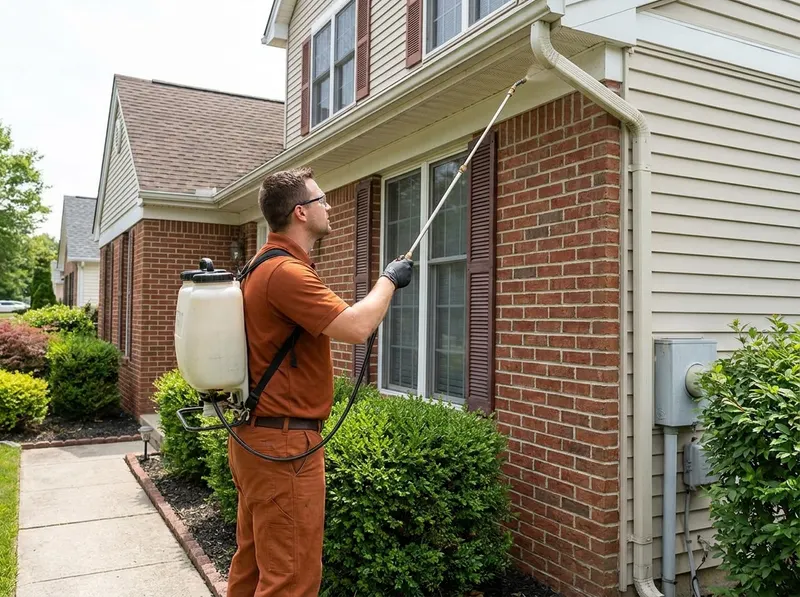
Spider pressure in Sicklerville is mostly a lot-edge problem. Homes backing the woods around New Brooklyn Park and New Brooklyn Lake, properties near the Winslow Fish and Wildlife Management Area, and the tree-lined rear yards in Sturbridge Woods and Winslow Crossing sit against the same Pine Barrens-edge habitat that produces the insects spiders eat. Grass spiders build funnel webs in shrub beds and mulch rings, wolf spiders wander in under garage doors and through gaps at sliding-door tracks, and cellar spiders colonize the cool block foundations common in the Old Sicklerville village stretch along Sicklerville Road. In the newer slab-built sections of Villages at Cross Keys and Stonegate, the calls skew toward webs in soffit returns, over front entries, and around exterior lighting — because lights pull in the moths and midges, and the spiders simply set up where dinner is.
The single most useful step in spider work is physical removal. Sprayed webs stay in place and refill; hand-swept webs and destroyed egg sacs remove the next generation. So we start with a pole sweep of eaves, porch ceilings, gable vents, window frames, and shutter edges, then move to the basement, crawl space, garage and shed — the places where Braddock, Blue Anchor and Erial homeowners with detached outbuildings and stacked firewood tend to find the bigger, more alarming specimens. Any black widow found near a woodpile or under shed shelving is removed and pointed out to you, along with what to change about the storage so it doesn't come back.
One visit versus a recurring program is a real decision, and the honest answer depends on where the spiders come from. A one-time treatment fits a specific, contained problem — webs across a front door before a party, a basement clean-out at a Victoria Manor rental turnover, a garage nobody has swept in two years. Recurring quarterly service fits homes with a permanent insect supply next door: a wooded rear property line, a pond or wet swale, dense landscaping against the foundation, or exterior floodlights that run all night. The trade-off is straightforward: a single visit resets the house and buys you weeks to months of relief, while a quarterly perimeter keeps the food chain interrupted so webs never re-establish thickly. We'll tell you which one your house actually needs and we don't lock anyone into a contract they can't stop.
Exclusion is treated as part of spider control, not an upsell afterthought. Common findings on Sicklerville homes include worn garage door bottom seals, unscreened foundation weep vents, torn window and porch screens, gaps at hose bibs and dryer vents, and basement bulkhead doors that no longer seat. We list what we find, seal what we can that day, and explain what needs a contractor. Product placement and re-entry are stated plainly before we start: exterior perimeter and harborage applications outside, crack-and-crevice placement rather than broadcast spraying in living space, food-prep surfaces left untreated, and clear guidance on keeping kids, pets and vegetable beds away from treated areas until dry. If you garden along the back fence in Wiltons Corner, say so — we'll adjust where we apply and where we don't.
Every job gets a firm, written price after a free on-site visit.
Tell us about your spider control job in Sicklerville and we'll send a clear, written quote — usually the same day.
 Premium Pest Control